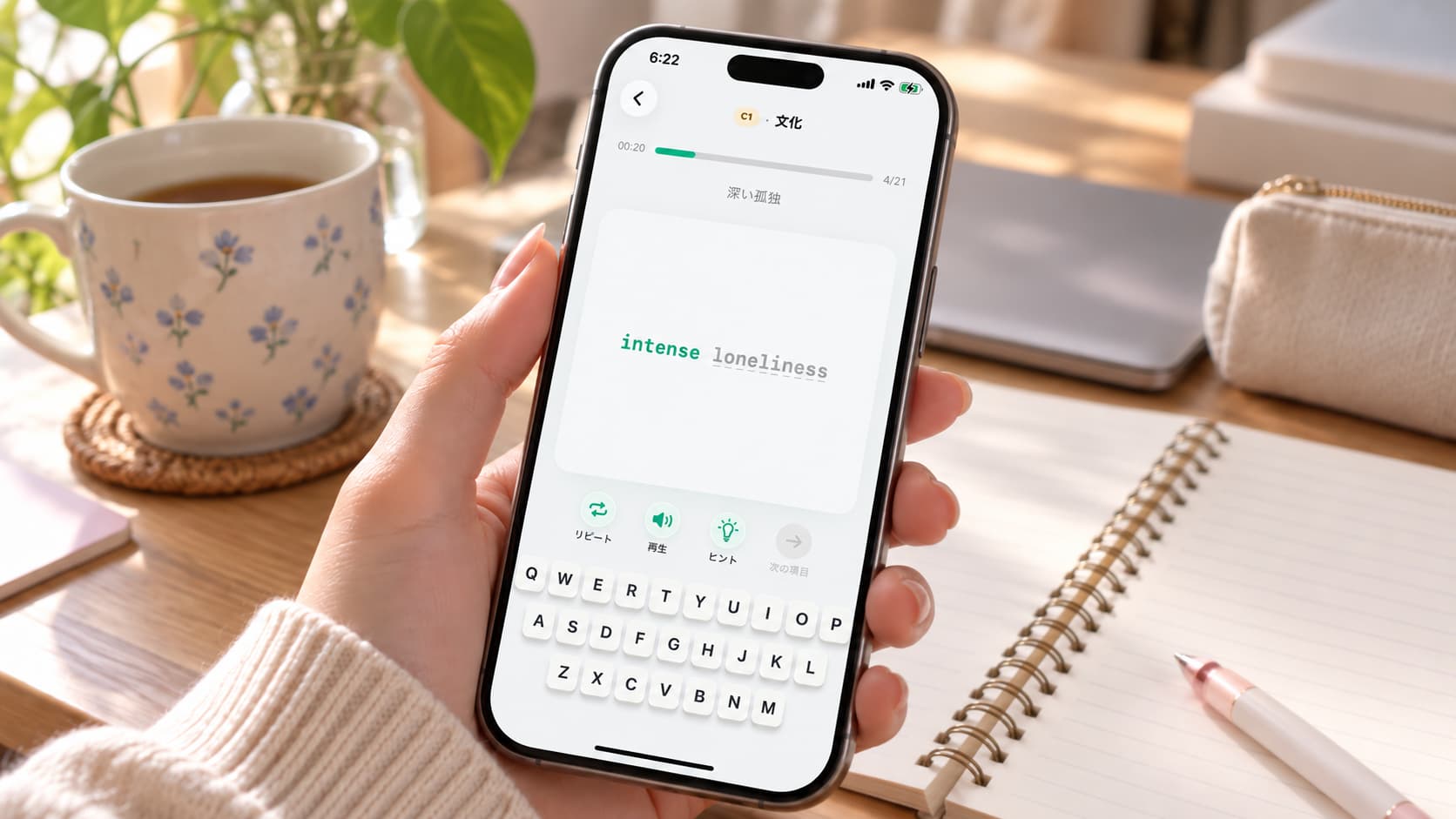
You probably know the literal meanings of body and research. Yet when you see a body of research, it does not always click right away that the phrase means a large collection of studies.
This is the classic trap of memorizing words in isolation. You can recognize every single word on its own, but once those words join into phrases and fold into a long sentence, the actual meaning still slips past you.
A classic study by psychologist George A. Miller showed that when the brain processes information, it groups common phrases, collocations, and sentence patterns into single units, or “chunks.” Learning language in meaningful chunks, rather than memorizing isolated words, significantly lowers mental effort and helps you retain much more.
Miller, G. A. (1956). The magical number seven, plus or minus two: Some limits on our capacity for processing information. Psychological Review, 63(2), 81–97.
doi.org
I used to practice with a vocabulary web app that required typing out every letter of a word on the keyboard before moving on. I loved that approach. Reviewing flashcards often leaves you with a vague sense of familiarity: a word looks recognizable on screen, but when you have to spell it from scratch, your fingers freeze. Typing out the full word forces you to lock down every detail.
Still, that tool only handled individual words. Following the logic of chunking research, what learners really need is training built around phrases and complete sentences.
Why Progressive Dictation?
When you extend letter-by-letter typing from single words to phrases and sentences, dictation is the natural next step.
Research by Lee, S. C. demonstrated that consistent dictation practice with authentic, fast-paced speech significantly improves listening comprehension over time, with positive carry-over to speaking skills as well.
Lee, S. C. (2010). Developing intensive listening skills: A case study of the long-term dictation tasks using rapid speech. The English Teacher, 39, 94–120.
openurl.ebsco.com
Dictation alone, however, is not enough. How do you structure the practice into a coherent whole so it does not turn into a pile of disconnected drills?
A study by Wightman and Lintern on part-task training showed that practicing individual components step by step before combining them into the full task reduces cognitive load and makes learning far more effective.
Wightman, D. C., & Lintern, G. (1985). Part-task training for tracking and manual control. Human Factors, 27(3), 267–283.
doi.org
For non-native English speakers, transcribing a long sentence right from the start is tough. By the time you catch the first half, the second half has already faded from memory. If you break that long sentence down first, practice its key words, phrases, and grammatical structures one step at a time, and then gradually reassemble them into the full sentence, you begin to see clearly how each piece fits together.
That is the core idea behind progressive dictation.
From Prototype to BiteLoop
With so many English learning apps already on the market, why build another one?
Thanks to AI, breaking down sentences in a structured way, something that used to be very hard to automate, is now practical. Any sentence can be broken into graded segments around its core vocabulary, collocations, and grammar patterns, allowing learners to loop through these building blocks until they master the full sentence. This training method is the starting point of the product, and the reason BiteLoop exists.
To test the idea, I first built a simple web app. You could paste in any English passage, let AI break it down on the spot, and practice through the resulting segments round by round.
After using it myself for a while, I knew the method worked, but I also ran into a real practical hurdle. Asking users to hunt down their own reading material, copy and paste it manually, and wait for AI processing every single time creates too much friction. On a phone, searching for articles, copying text, and switching back and forth between browsers and apps feels clumsy. Even a small distraction is enough to make someone quit before they start.
So I decided to move material curation and sentence breakdown entirely to an online service. Users do not need to hunt for texts or jump between different web pages and apps. By removing the friction before practice begins, you can open the app and start training right away.
In short, BiteLoop does three things:
- Curates authentic English media texts and breaks them down by core vocabulary, collocations, and grammatical structures.
- Generates matching audio for every individual segment.
- Delivers science-backed progressive dictation, guiding you through structured segments in loops until you master the complete sentence.
Download here: apps.apple.com