Fourteen Years of GuitarNotes, and Why I Finally Built an App for Real Guitars
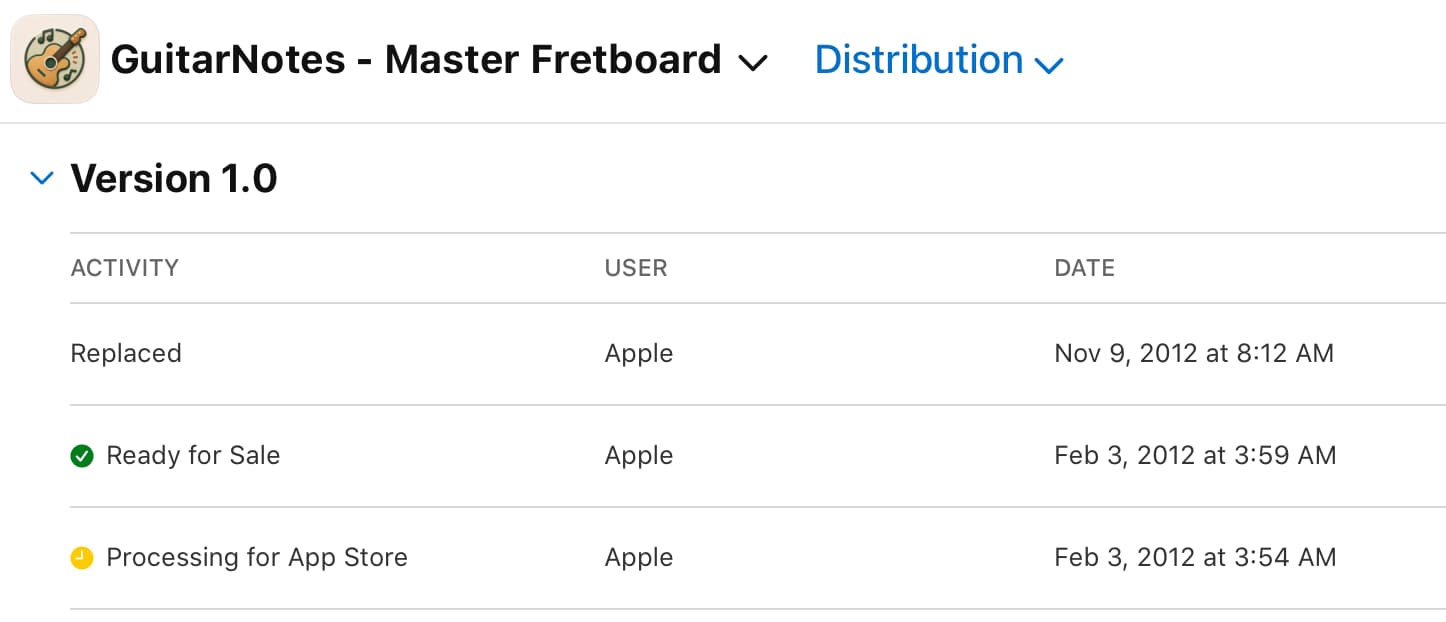
GuitarNotes first shipped on February 3, 2012. My birthday followed three days later, so the two dates have always lived close together in my memory. I didn’t expect, sitting down to write this, that it would already add up to fourteen years.
I recently gave the app a full UI rewrite. The new interface leans into a soft, tactile skeuomorphic style, with physical feedback: tap a note, and the string on screen visibly quivers like a real one. It’s a small touch, but it makes the app feel like an instrument rather than a diagram.
What hasn’t changed is the core. The feature set was locked in with version one, and almost every update since has been about keeping pace with iOS releases or refreshing the interface rather than adding new features. The original idea didn’t need much added to it.
GuitarNotes was probably the second or third app I ever built. It started in Objective-C with Storyboards, was later rewritten in Swift, and is now built in SwiftUI, tracing iOS’s own evolution along the way.
The idea behind it was tiny. I was teaching myself guitar and kept running into the same two problems: given a note name, where is it on the fretboard? And given a position on the fretboard, what note is it? It was a personal itch to scratch, but a lot of players shared it, and the kind reviews over the years still mean a great deal to me.
GuitarNotes has always trained you on screen, tapping virtual frets and reading notes. Over time, I heard from players who wanted the same practice on their actual guitars.
That feedback led to Note Smash, a new game I just released. It listens through the microphone, detects pitch in real time, and lets you practice with a real instrument. Pitch detection was a deep rabbit hole; getting it fast enough to keep up with live playing without sacrificing accuracy took a lot of work, but the result responds with virtually no lag.
Fourteen years is a long time to keep coming back to the same small idea. I’m glad it still feels worth building on.