Building the Ultimate Minimalist Virtual Guitar App for iOS
Have you ever looked back at an old piece of software and realized that, despite a decade of technological progress, modern alternatives somehow feel worse?
Two weeks ago, a wave of nostalgia hit me. I remembered a virtual guitar app I used to play hours on back in the iPod Touch era, long before I even owned an iPhone. On that tiny screen, it was pure joy.
Out of curiosity, I re-downloaded it. The App Store page showed its last update was 11 years ago.
Against all odds, it still worked. The UI was dated, the interactions needed a complete overhaul, and the developer’s X (Twitter) profile had long gone dark. But when I downloaded a few modern competitor apps for comparison, I was disappointed. Most of them were bloated, covered in flashy but useless UI fluff, and lacked the core playability of that 11-year-old abandoned project.
As an independent iOS developer, I only had one thought: I can build something better, cleaner, and completely direct.
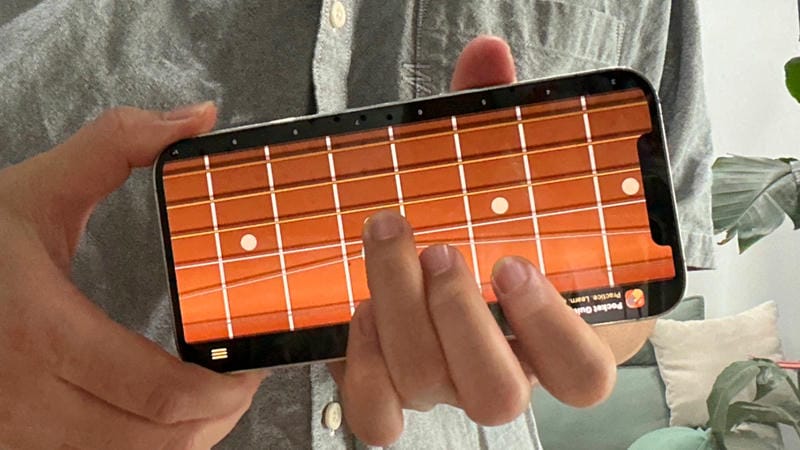
That spark led to the creation of Pocket Guitar—a minimalist, highly responsive virtual guitar simulator built for musicians and creators who want zero friction.
Technical Foundation: Master Class Audio on iOS
A great musical instrument app lives and dies by its audio engine and latency. I didn’t want synthetic, robotic tones.
Thanks to AudioKit, I had the perfect sound synthesis framework to get started. I quickly built a one-string proof-of-concept to test the absolute essentials of guitar expression:
- Bending (Push/Pull)
- Sliding (Glissando)
- Hammer-ons & Pull-offs
Once the core physics and touch responsiveness felt authentic, I scaled the architecture into a full production app.
Pure Performance, Zero Corporate Bloat
Pocket Guitar is built to be an elite pocket instrument. No forced accounts, no clutter—just open the app and play.
1. Six Premium, Authentic Tones
Out of the box, the app features six distinct, studio-grade sound profiles optimized for mobile playback:
- Distortion Guitar (For heavy riffs and rock leads)
- Clean Electric Guitar (Crisp, bright, and versatile)
- Acoustic Guitar (Rich, natural resonance)
- Nylon/Classical Guitar (Warm and intimate fingerstyle)
- 12-String Guitar (Deep, lush, and shimmering chorus effect)
- Jazz Guitar (Smooth, dark, and velvety tones)
2. Advanced Physical Interactions
Beyond basic switching and built-in reverb effects, I added tactile and visual feedback loops that make the digital strings feel alive:
- Visual String Vibration: Strings react dynamically to the velocity and style of your touch.
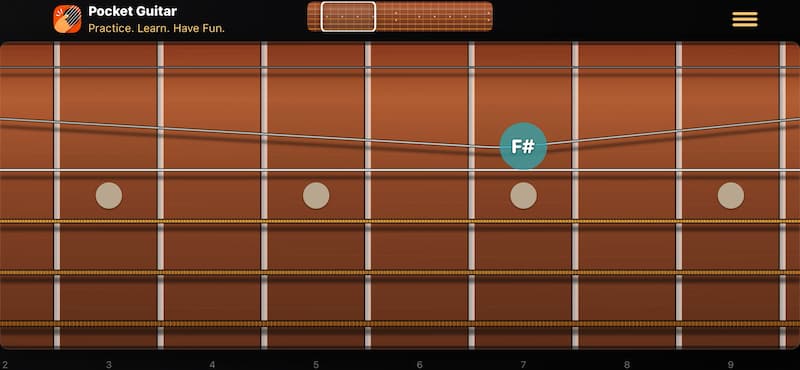
- Note Name Overlays: Real-time visual feedback showing exactly which notes you are playing across the fretboard—perfect for learning music theory on the go.
- Fretboard Minimap: A seamless navigation bar that lets you scroll the entire length of the neck instantly.
3. Ergonomic iPad Layout for Real Performance
Most tablet guitar apps center the fretboard, forcing you to hold the device awkwardly. For the iPad version of Pocket Guitar, I shifted the fretboard layout directly to the edges of the screen.
This ergonomic change allows you to hold the iPad naturally and play with your thumbs or fingers while standing. It isn’t just a toy; it is fully capable of being used as a live performance tool or a portable MIDI-style scratchpad.
From “How is this made?” to “Done.”
Over a decade ago, I was holding a programming textbook, completely self-teaching iOS development, constantly wondering: How do developers build these magical tools?
Fast forward to today. The Apple ecosystem has matured massively, but the real game-changer is the AI era. Combining modern frameworks with AI-assisted workflows allowed me to move from a nostalgic thought to a fully realized, optimized App Store product in just two weeks.
Now, I finally have the exact guitar app I wanted: lightweight, privacy-focused, offline-first, and always ready to pull out of my pocket whenever inspiration strikes.
You can download Pocket Guitar on the App Store here.